


Why Microfibres in the Wash Matter
Every time you run a load of washing, tiny fragments of fabric break away from the items inside and leave with the wastewater. When those fragments come from synthetic textiles — polyester sheets, acrylic jumpers, nylon activewear — they arrive in the environment as microplastics. They are small enough to slip through most wastewater treatment processes, and they have been found in rivers, estuaries and coastal sediment, and in the wildlife that feeds there.
The encouraging part is that the amount shed is not fixed. It depends on what you wash, how you wash it and how you dry it. A handful of changes to your routine — none of them difficult, and most of them kinder to your bedding as well — can meaningfully reduce the number of fibres leaving your machine. Gentler washing also means less pilling, less thinning and a longer life for the linen and cotton you have already invested in.
Natural Fibres Shed Too — But Differently
Linen, cotton, wool and hemp all shed fibres during washing, just as synthetics do. The difference is what those fibres are made of. Cellulose and protein fibres are biodegradable, so what leaves your machine is broken down by microbes rather than persisting for centuries. A linen pillowcase is not a plastic problem, however hard you wash it.
This is why the single most effective step is to look at what your bedding and clothing are actually made of. Pure cotton, linen, brushed cotton and wool are all good choices. Watch out for blends, though: polycotton might feel soft and cost less, but a 50/50 blend still contains a substantial amount of plastic, and it will shed microfibres with every wash. Check the label before you buy, and favour the highest natural-fibre content you can find within your budget.
Wash Full, Wash Cool, Spin Slower
Friction is what releases fibres. The more your laundry tumbles against itself and against the drum, the more lint and microfibres it produces. You can reduce that friction without much effort:
- Wait for a full load. A half-empty drum gives each item more room to move and rub. Fill the drum loosely — you should still be able to fit a hand flat on top — rather than compressing everything in.
- Choose a shorter, cooler cycle. A 30°C wash is perfectly adequate for everyday bedding and clothing, and it is gentler on fibres than a long hot programme.
- Lower the spin speed. Dropping from 1400 to 800 or 1000 rpm reduces the mechanical stress on wet fabric considerably, and your linen will crease less too.
- Skip the pre-wash unless something is genuinely heavily soiled. Every extra rinse and agitation stage adds to the fibre loss.
Delicate and wool cycles are worth using for anything loosely woven or prone to pilling. They use more water and gentler agitation, which cushions the fabric rather than scouring it.
Detergents, Softeners and the Rinse
Whether you use powder or liquid matters far less than how much you use. Overdosing leaves detergent residue in the fabric, which tempts you into longer or extra rinses to shift it. Follow the dose on the pack, and reduce it further for soft water areas.
Fabric conditioner is worth reconsidering. It coats fibres in a waxy film, which can increase shedding from some synthetics and steadily reduces the absorbency of cotton towels and linen. A splash of white vinegar in the conditioner drawer does a similar job of softening without the coating.
If you want to capture what does shed, a fine mesh laundry bag for synthetic items, or a washable filter ball designed to trap fibres, will hold onto a useful proportion of them. Empty whatever you collect into the bin rather than rinsing it down the sink, where it heads straight for the watercourse.
Drying Choices That Make a Difference
Tumble dryers are hard on textiles. The lint you clear from the filter is fabric that has been worn away, and the finest particles travel out with the exhaust air or settle around the room. Every drying cycle therefore shortens the life of your bedding while adding to the microfibre load in the environment.
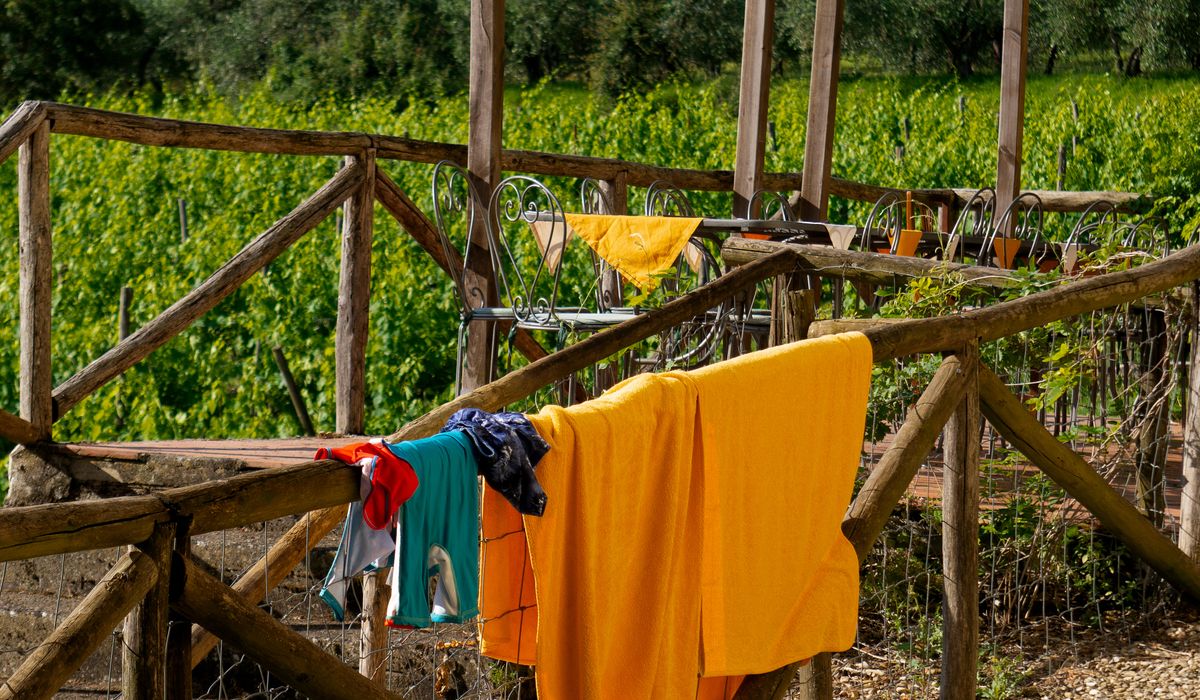
Air drying is the simplest upgrade to any laundry routine. A line in the garden, a rotary dryer or an indoor rack all leave fibres intact, and linen in particular dries beautifully in moving air, becoming crisper and softer with each wash. If you do use a tumble dryer, choose a low heat setting, a shorter timed cycle, and stop while the load is still very slightly damp.
Be thoughtful about lint disposal, too. Lint from cotton and linen can go into the bin with general waste or onto the compost heap. Lint from polyester, acrylic or blends is plastic — bin it rather than rinsing it away.
Building a Gentler Laundry Routine
The most sustainable wash is often the one you did not run. Bedding generally needs changing weekly to fortnightly, but jumpers, trousers and dresses can usually be aired between wears and washed far less often than habit suggests. Spot-clean where you can, hang things up to breathe overnight, and save the machine for when it is genuinely needed.
When you do replace bedding or towels, treat it as a chance to shift the balance of your linen cupboard towards natural fibres. Linen, cotton and wool shed less plastic, wear beautifully, and improve with age rather than deteriorating. Combined with full loads, cooler programmes, slower spins and air drying, those choices add up to a laundry routine that is kinder to rivers and oceans — and, happily, to the textiles you love.


Leave a reply