


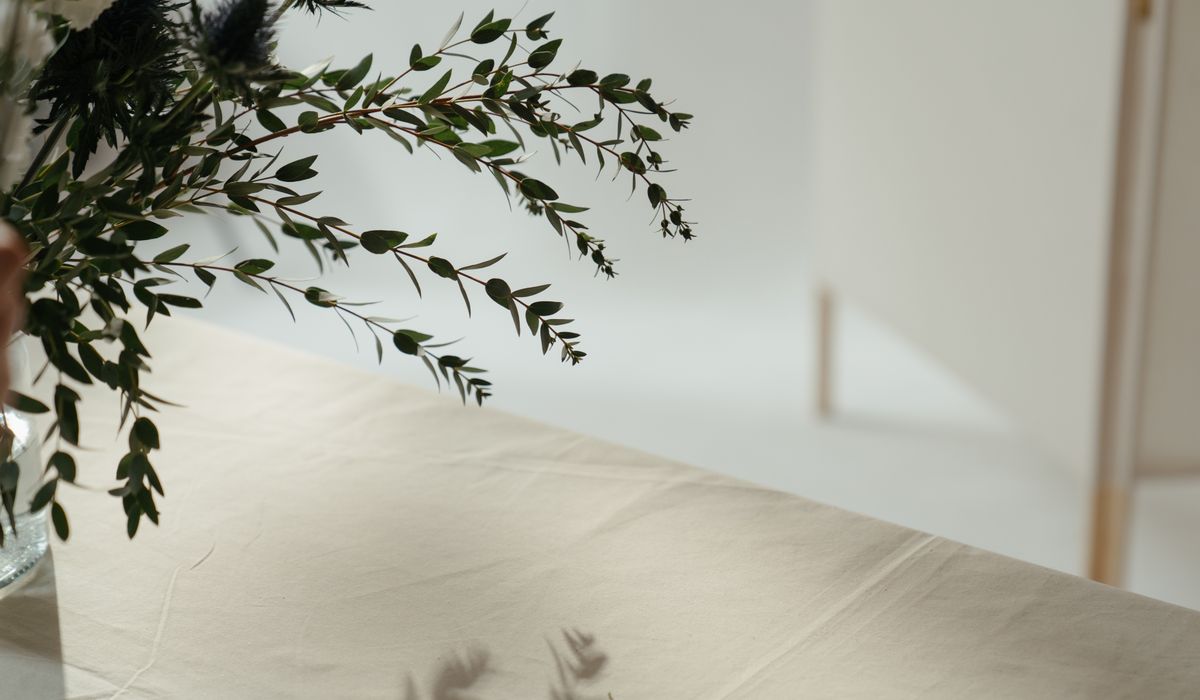
Everyday linen has a job to do
There is a particular kind of table linen that earns its place: not the heirloom damask that comes out twice a year, but the napkins you reach for on a Tuesday, the runner that stays put through breakfast, lunch and a late supper. Everyday table linen works harder than almost any textile in the house. It meets hot plates, tomato sauce, red wine, crayons and the odd elbow. It is washed far more often than bedding, and it is seen by guests who never notice your sheets.
The good news is that this makes choosing it easier, not harder. Durability, easy washing and a relaxed look are the three things that matter, and once you hold those at the centre, the decisions become straightforward. My usual formula is simple: neutral napkins, one patterned runner, and a fabric that improves with washing rather than fading into limpness.
Start with the fabric, not the colour
Fabric decides how the linen behaves after the twentieth wash, long after the colour has stopped being interesting. For everyday use, look for:
- Linen around 170–200 gsm, ideally stonewashed. It is absorbent, gets softer with every cycle, and hides creases as texture rather than mess.
- Cotton in a plain weave, similarly weighted. Crisper than linen, slightly less forgiving of spills, but endlessly practical.
- Cotton-linen blends — often sold as half-linen — which give you the linen look with a little more stability and less ironing.
What to avoid for daily use: heavy jacquard damask, satin finishes, and anything with a stiff resin coating. These are beautiful, but they scuff, hold creases in the wrong places, and rarely survive frequent hot washing. If a fabric feels slippery and slightly synthetic, put it back.
Napkins: size, colour and hem
A napkin should cover a lap without engulfing it. For everyday dining, 40–45 cm square is the sweet spot; go to 50 cm only if you like a generous fold or serve a lot of shellfish. Buy in sets of four or six rather than two — even numbers fold neatly, stack evenly, and survive the loss of one to a wine stain without leaving you a set of three.
On colour, neutrals do the heavy lifting: oatmeal, chalk white, dove grey, warm stone, muted sage. These forgive fading, match whatever plates you own, and can be bleached or oxygen-treated without turning patchy. A narrow hem of 1–1.5 cm looks more modern than a wide one and lies flatter after ironing. Mitred corners are worth the small extra cost; they stop the corners curling after the first few washes.
The runner does the decorative work
This is where you can be a little braver. A patterned runner gives the table interest without asking you to commit to a full tablecloth, and it takes the knocks that a patterned napkin set would take far less gracefully. Classic options that age well: woven stripes, small checks, ticking, subtle botanical prints, or a simple two-tone block pattern.
On size, measure your table and add an overhang of 15–20 cm at each end. As a rough guide, a 140 cm runner suits a four-seater, and 180 cm works on a six-seater. Width of 35–45 cm sits comfortably between place settings without crowding the plates. If your table is very long, two shorter runners laid lengthways can look better than one that puddles at the ends.
Putting the two together
The trick with a neutral napkin and a patterned runner is restraint. Let the runner carry the pattern and the colour, then pull just one shade from it into the napkins or the tableware. If the runner has a deep indigo stripe, set the table with white or oatmeal napkins and let the indigo do its work alone.
Two practical notes. First, avoid matching the napkins to the runner exactly — a slight tonal difference reads as considered, whereas a perfect match can look like a hotel set. Second, keep the napkin in a plain weave if the runner has texture; two competing weaves fight each other across the table. A quick test: stand back a metre. If your eye lands on one thing, it is working.
Washing and care without the fuss
Everyday linen should be easy, and it is, provided you skip a few habits.
- Wash at 30–40°C with a gentle detergent. Hotter only when you genuinely need it.
- Skip fabric softener. It coats the fibres, reduces absorbency and builds up over time into a dull film.
- Pre-wash new linen before first use, and expect a small amount of shrinkage — around 3–5% for cotton, a little more for loose linen.
- Remove from the machine promptly and line dry in the shade. Sun is excellent for whitening but hard on coloured yarns.
- Iron damp, on the reverse, with a hot setting and a little steam. Or embrace the crease and skip it entirely.
- Treat stains early. Cold water and a little oxygen-based bleach handle most things; blot, do not rub.
Store napkins folded flat rather than rolled, and rotate your sets so no single one wears thin. Looked after this way, good everyday linen lasts years and simply gets better, which is more than can be said for most things on the table.


Leave a reply